
PersonalProject#001
What the fuck does Celeste even do?
Hi. I’m Celeste.
It’s nice to meet you,
really meet you,
officially,
here and now.
Out in the real world, I’m an experiential designer for museums and retail environments. I study how people move through space: what they notice, what they ignore, what they touch, what they leave behind. And what all of that reveals about how they think and what they want.
A lot of this work is observation. Humans leave evidence of thought and behavior everywhere. I pay attention to that evidence, and then I design around it.
I genuinely enjoy the work I do and I sincerely love design.
The interest carries over into my personal work. These projects are less about output and more about staying curious, and keeping myself sharp. Also, very nerdily, I enjoy it. Because I like people.
Which is why it’s nice to meet you.
Really.
Officially.
Here and now.
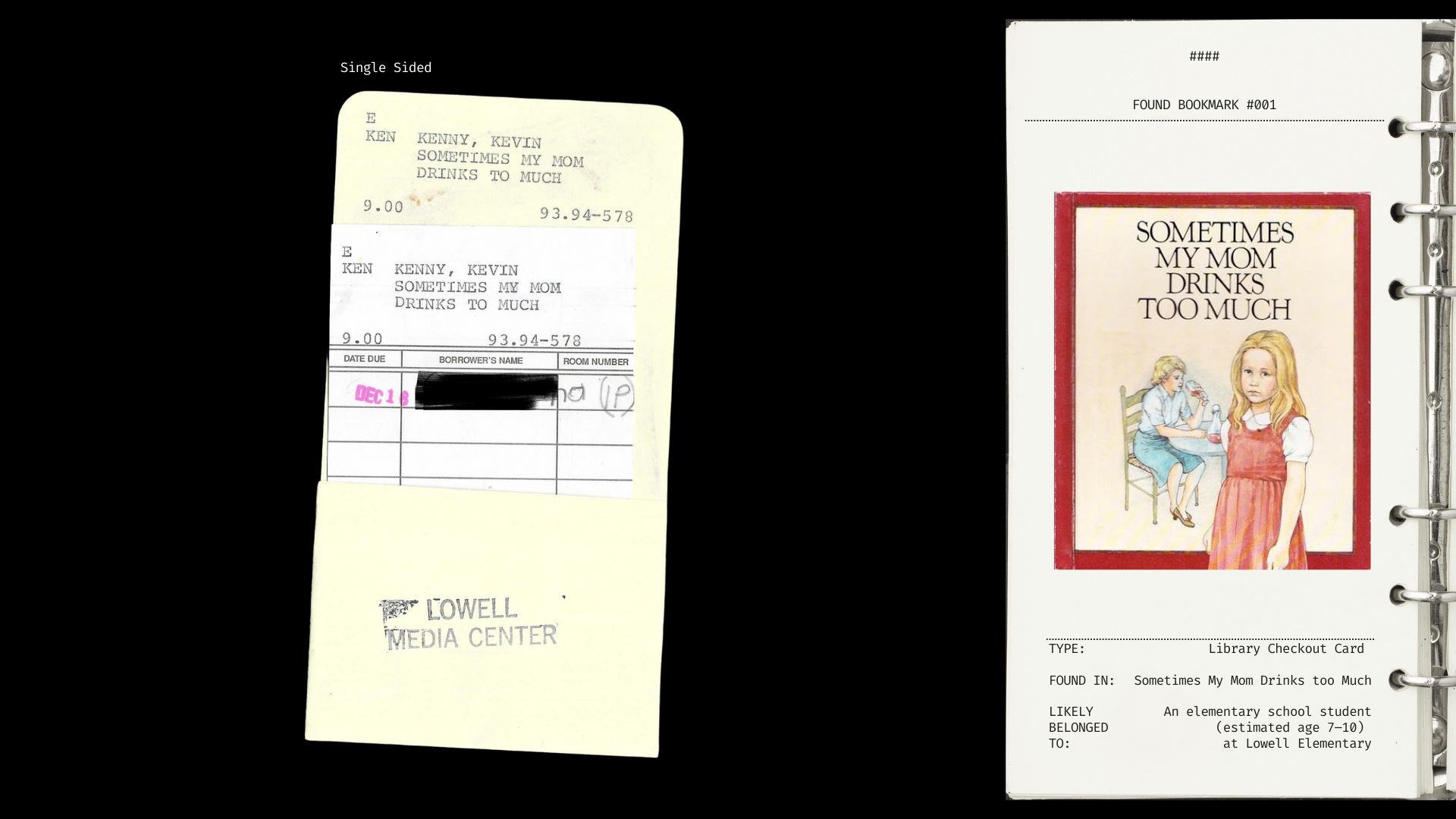
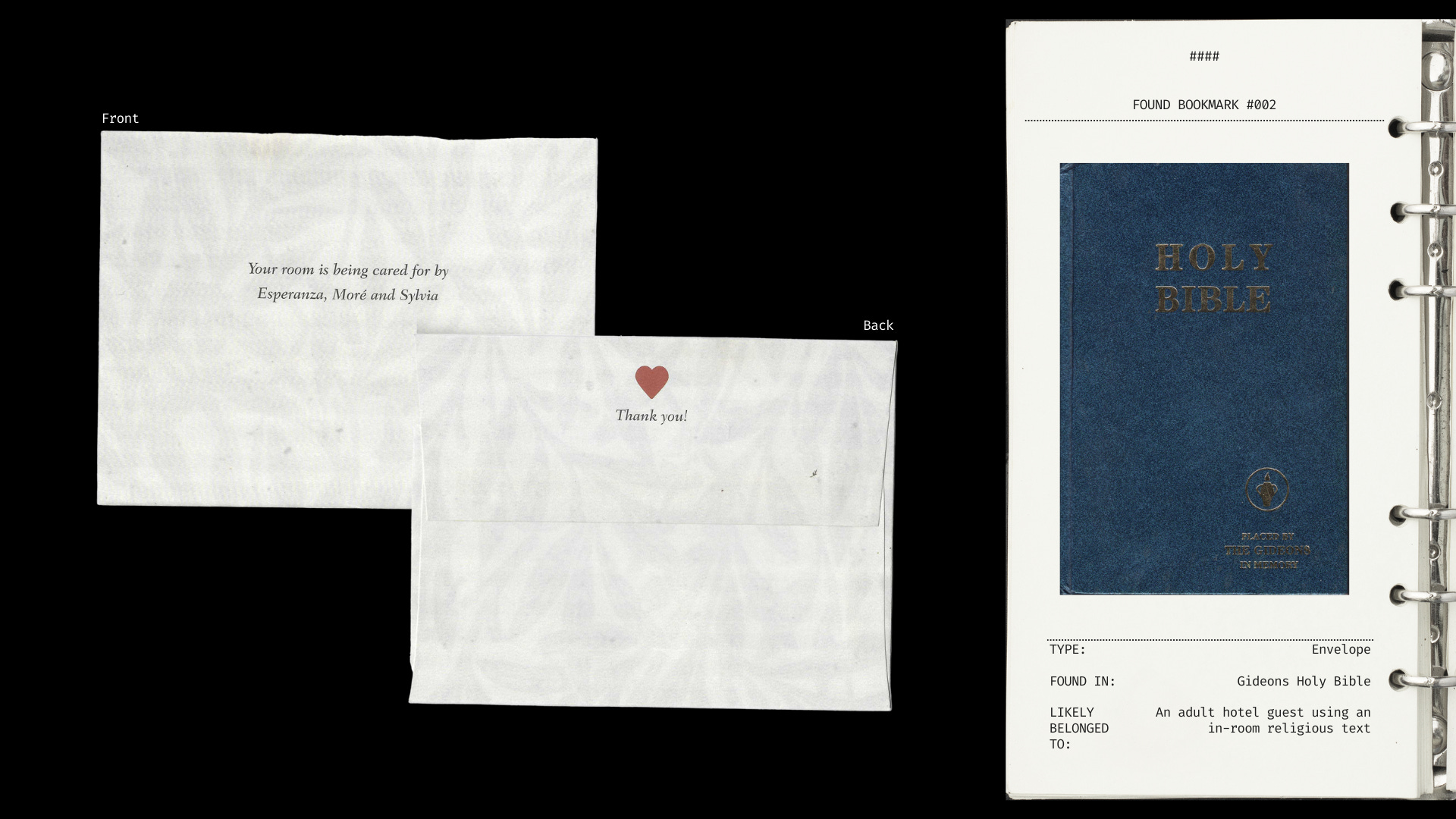
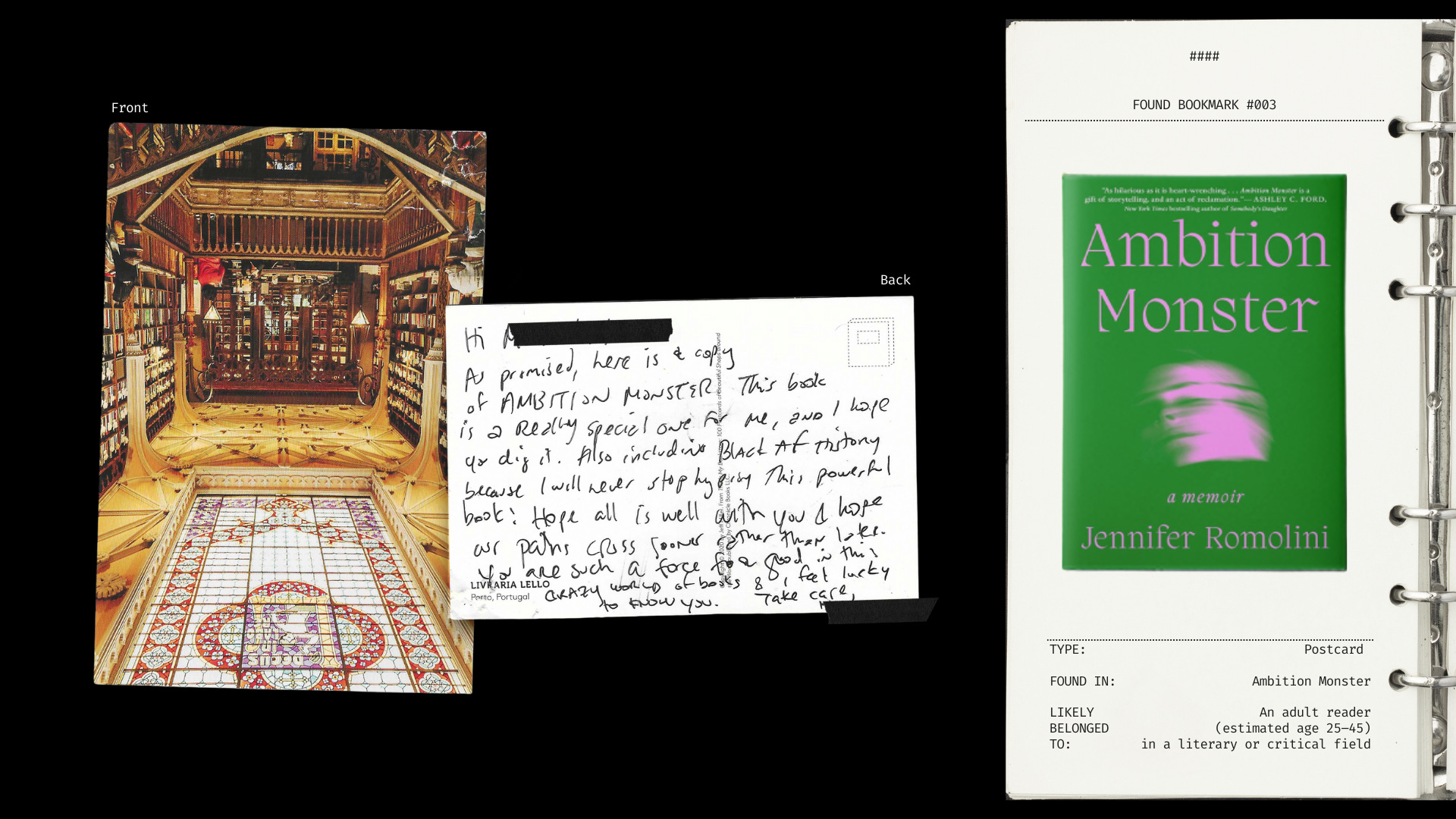
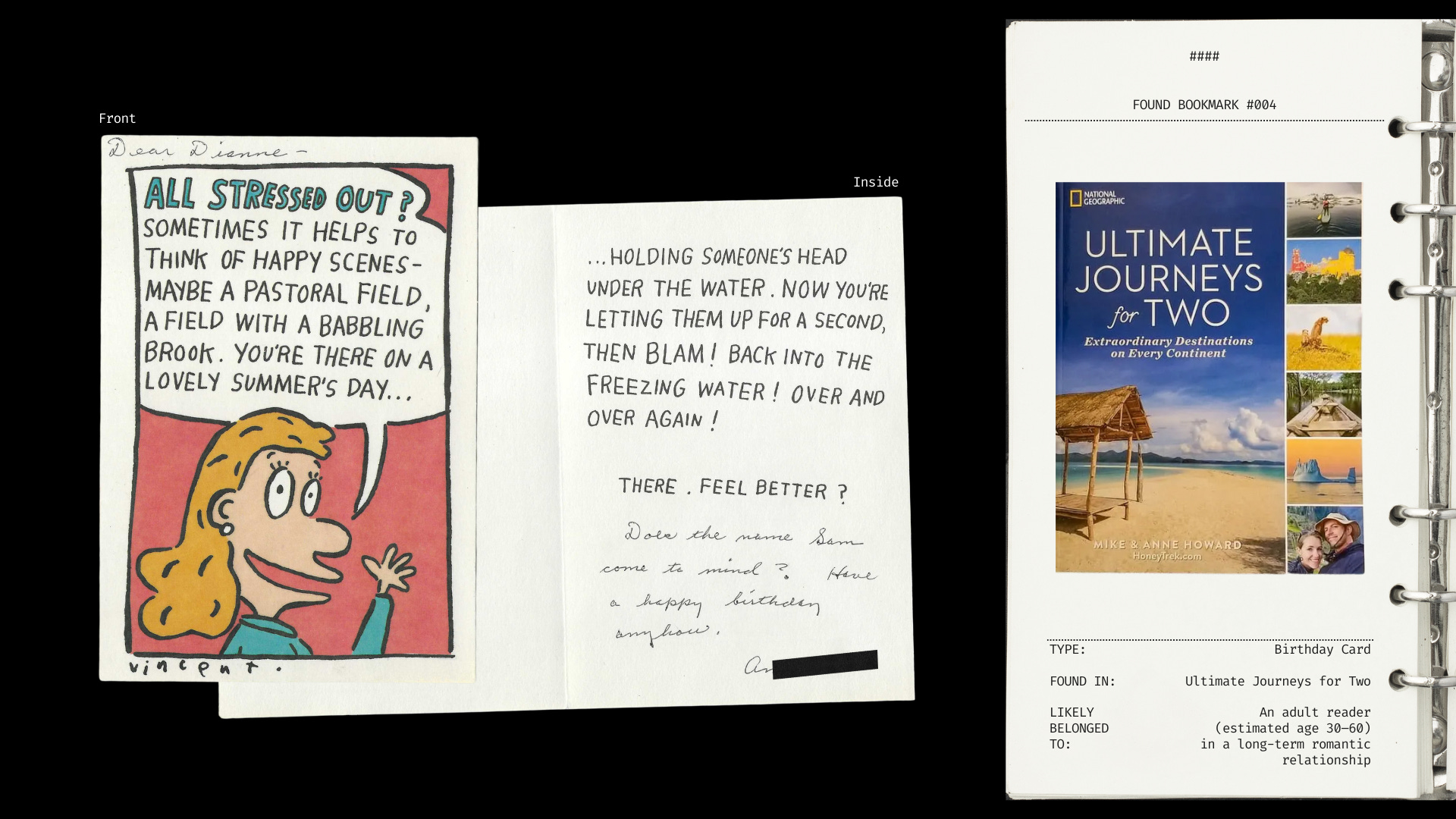
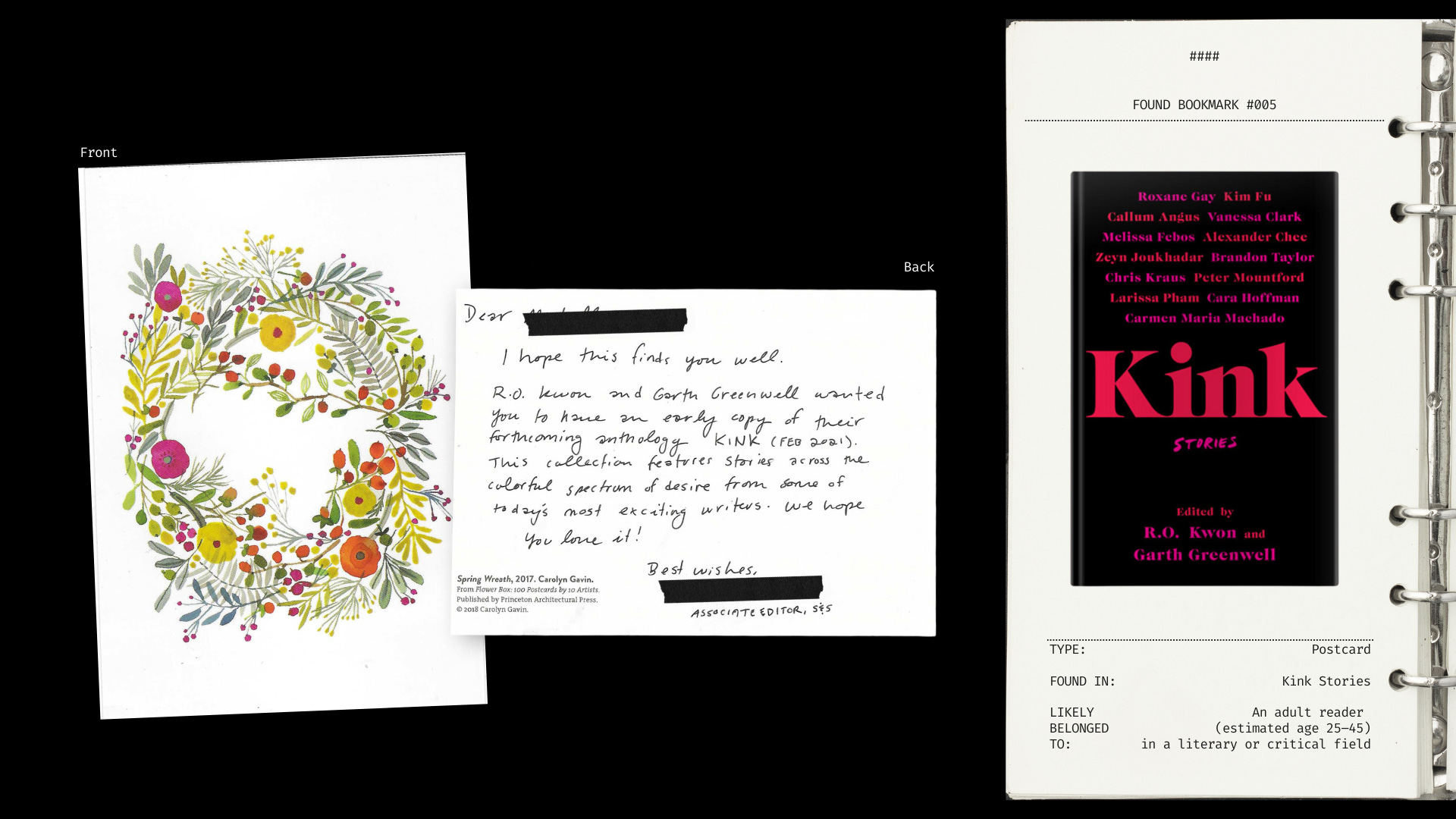
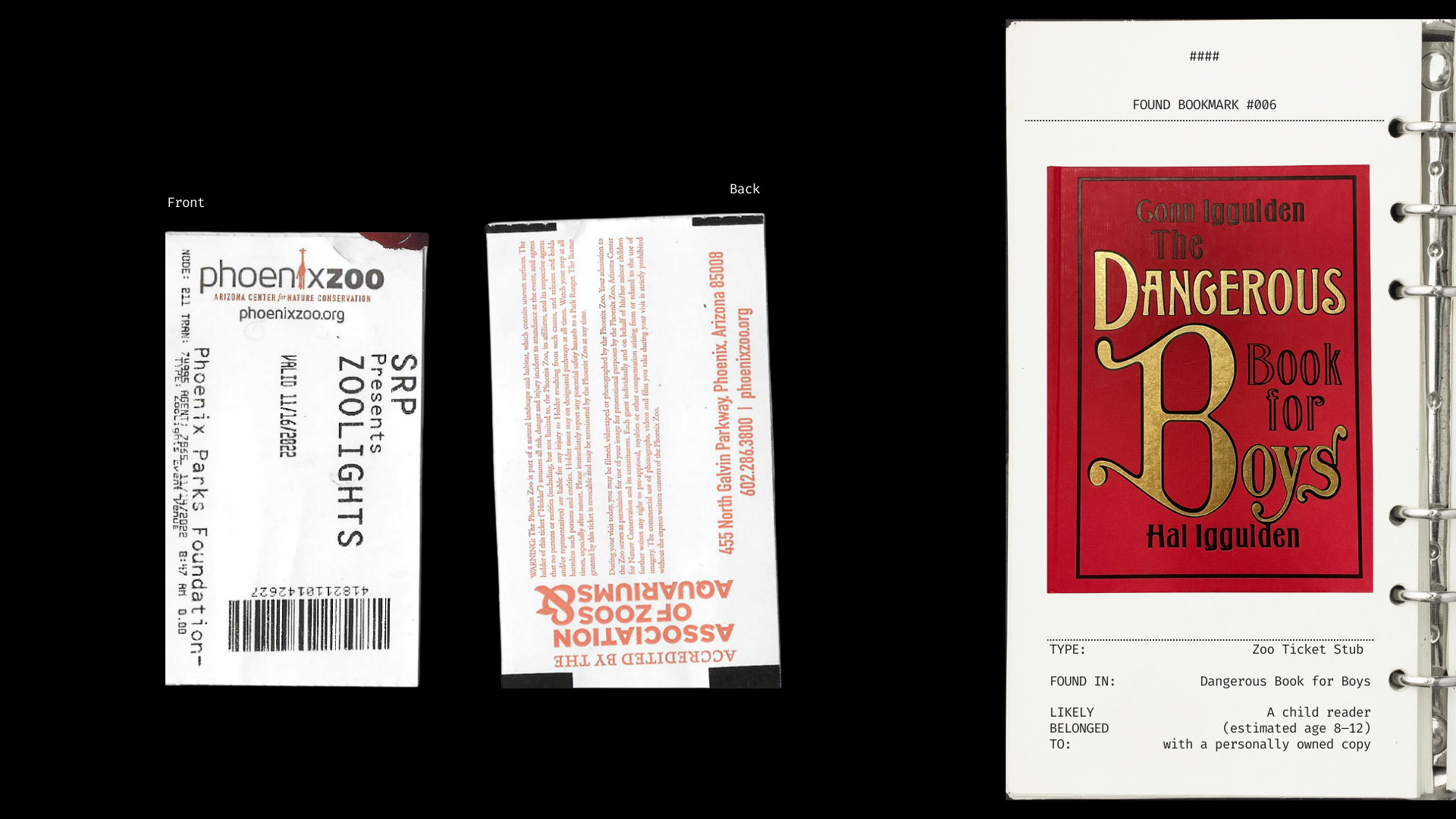
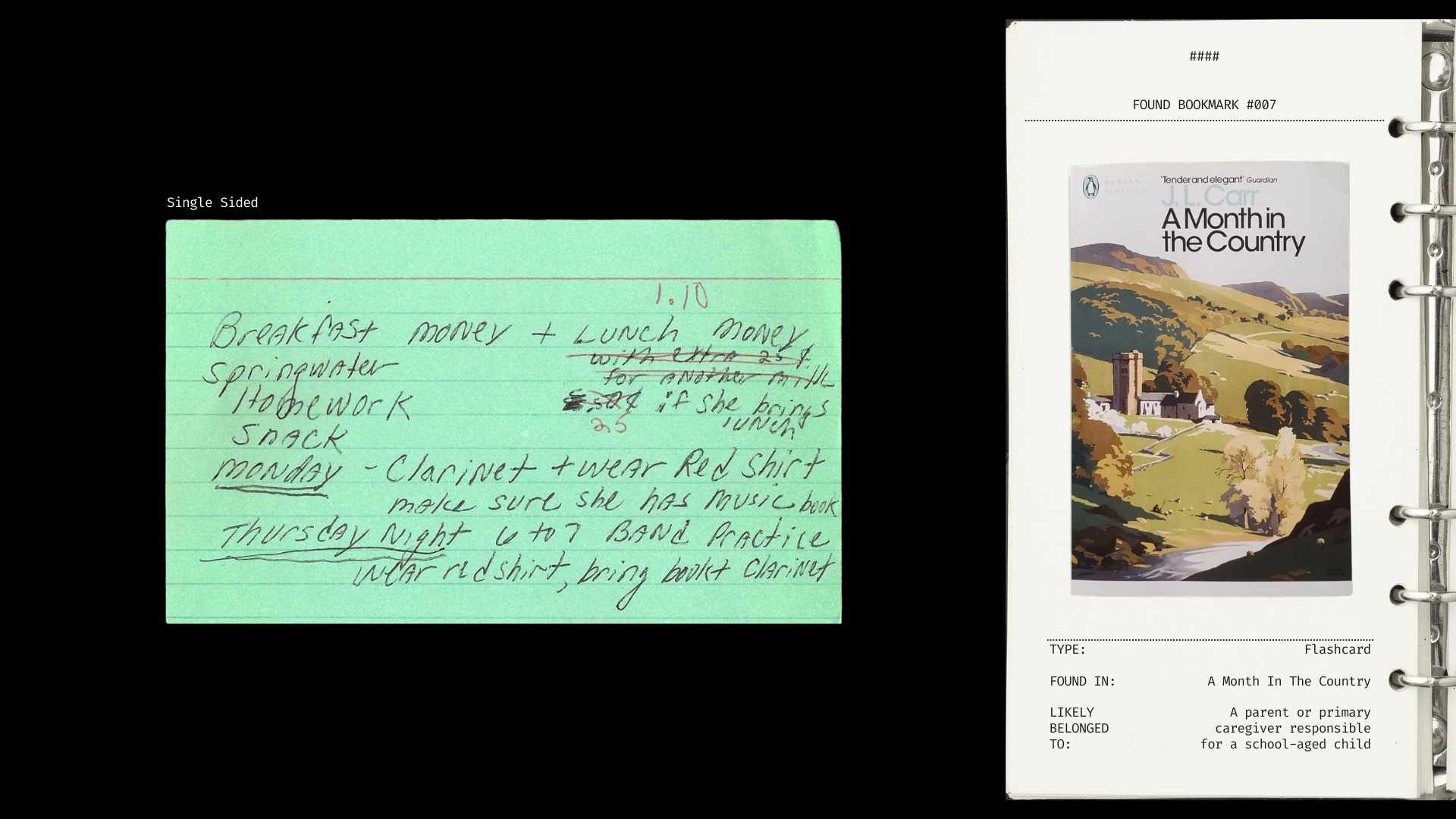
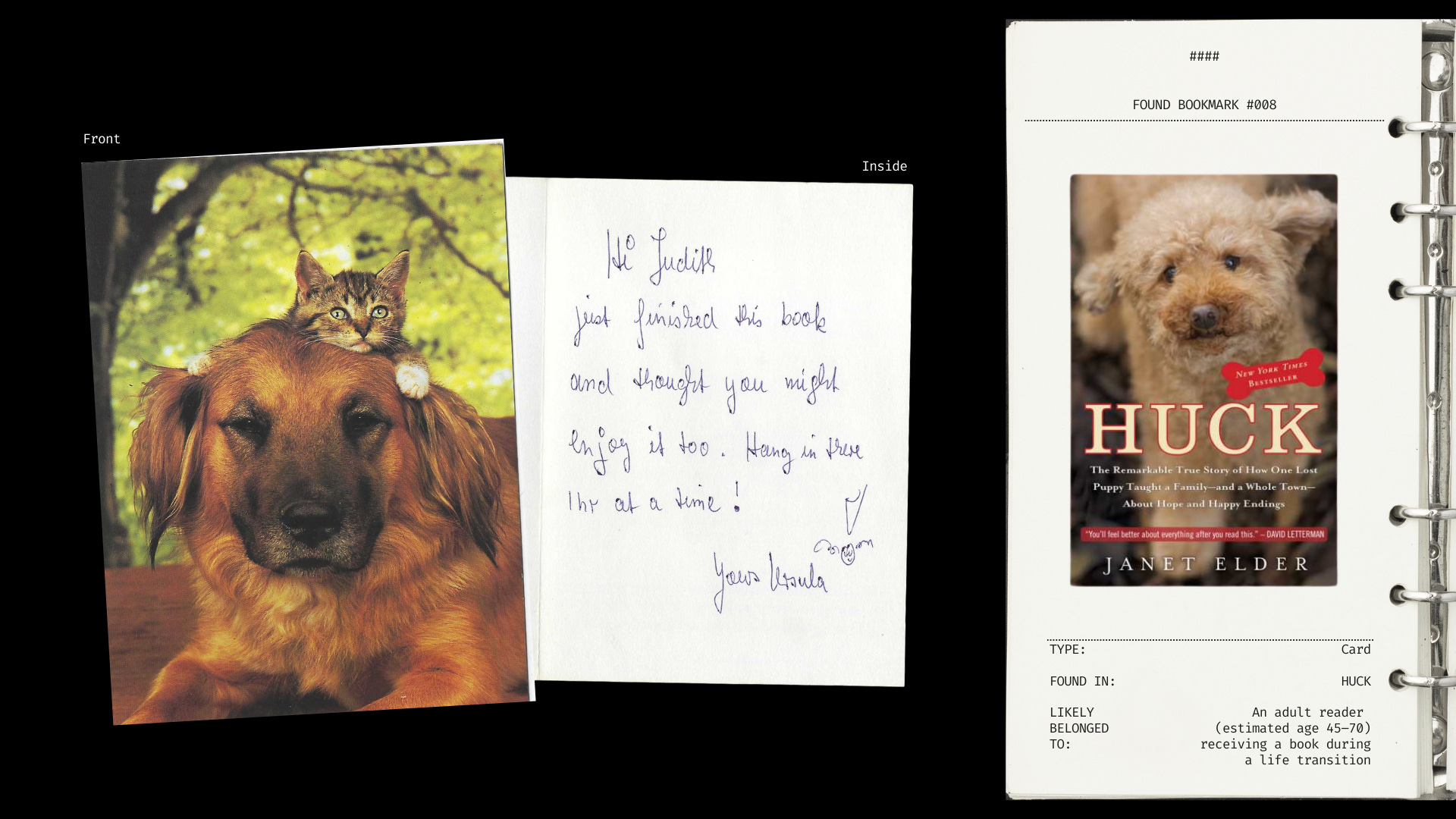
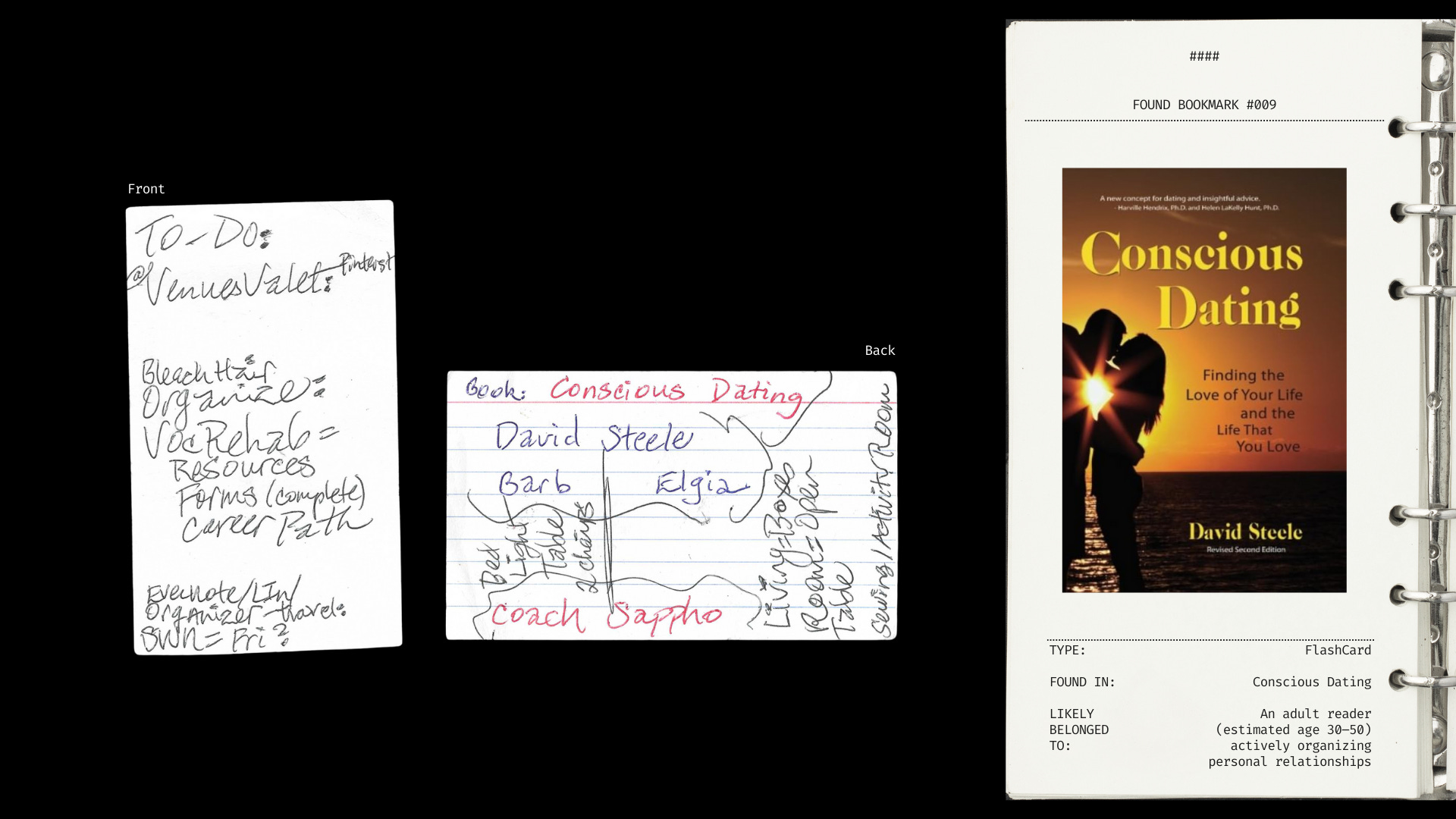
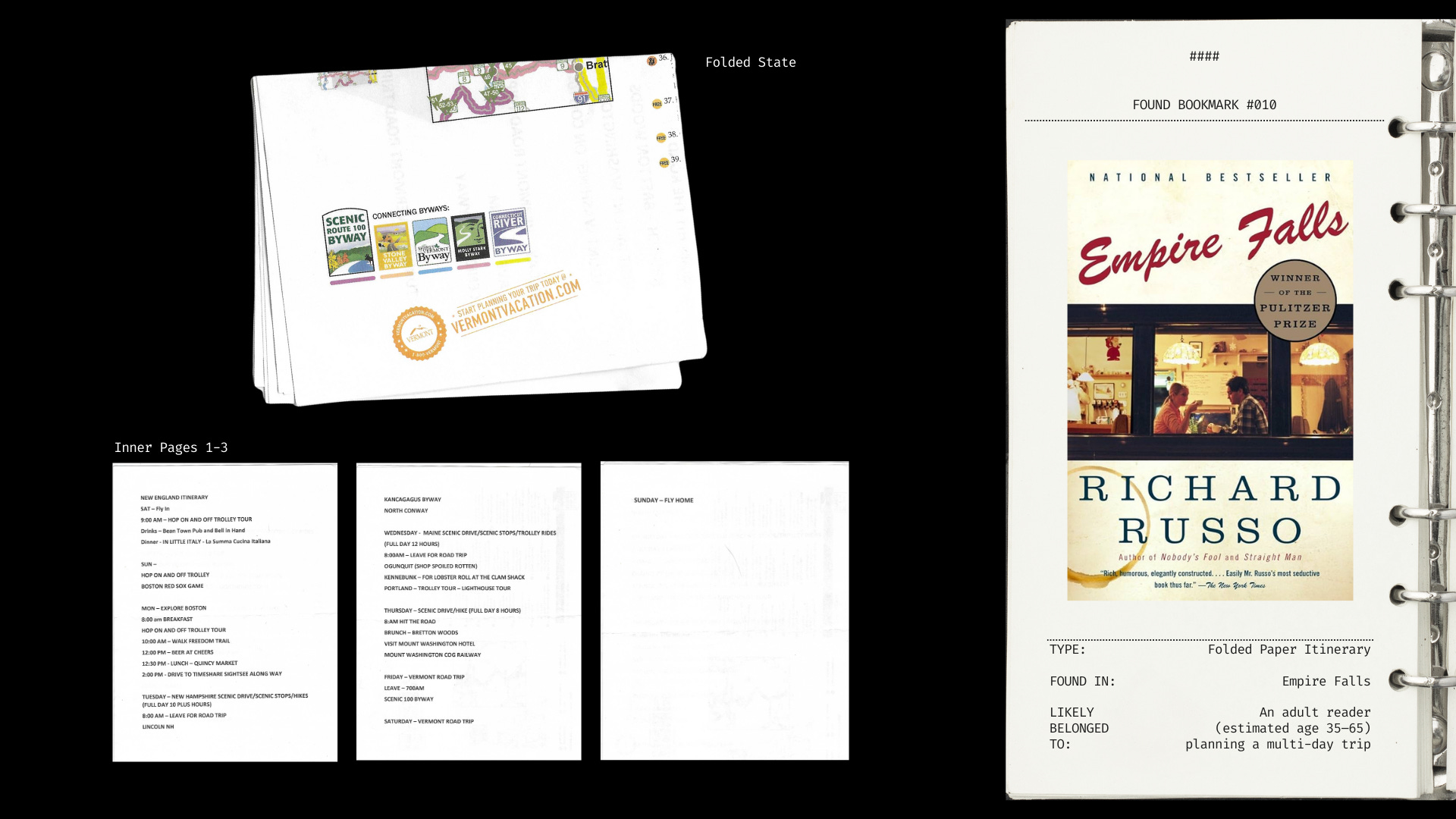
What you’ll find below are scans from a recent personal project: an ongoing archive of makeshift bookmarks I’ve found tucked inside books at used bookstores.
I scan the bookmarks and log the book.
This is the collection so far, presented as found.
(If you’re curious how this connects to what I do professionally, and why I ended up paying attention this way in the first place, that story is further down.)
The Work:
Have you ever walked into a store playing awful music and thought,
this is the worst collection of sound known to man.
Or passed a garish window display in the city and thought,
I could do better than that.
Do you ever think:
Who are these idiots?
How did this guy get this job?
I’m the person who got that job.
I’m those idiots.
I am one part of a small team that scripts the emotional arc from first sightline to exit. What that looks like changes depending on the client and the audience, but the ingredients are always the same: spatial layout, lighting, sound, materials, sometimes scent, and these days, plenty of interactive elements.
The work draws on behavioral science, production, and technical design.
It is great.
It is fun.
It also requires too much drafting, too much prototyping, and too many rulers.
At its core, experiential design is about behavior and evidence. Humans leave evidence everywhere. Smudges on glass. Grooves worn into carpet. Wear at the exact height a hand lands on a railing. These marks tell you where people slow down, what they touch, what they ignore.
For someone like me, these are design cues. When I draft a space, I play into them.
When I first entered this field, I was blindsided by the amount of things I did not know I did not know. Much of it was knowledge I already carried simply by being a living, breathing human who exists in space, but I had never been asked to translate that intuition into anything concrete. I did not yet know how to analyze experience, let alone design for it.
The goal, generally, was to take the everyday and freeze a feeling in time. To create a sustained moment of goodness. A pocket someone could step into and briefly live inside.
My peers could do this naturally. They seemed able to harness life and magnify its best parts. Every time I stood in a room filled with everyone else’s work, I thought: How, on god’s green earth, does one capture what it means to be alive? How does one hold that?
(This is actually a lot like how I feel about you writers here as well)
For the first eight months in my role, every day felt like being asked my favorite food and suddenly forgetting every meal I had ever eaten.
Objectively, this made sense. Most of my colleagues were fifteen years more seasoned than me. They came from theme parks, major museums, Broadway shows, movies, toy stores. Many of them had shaped my childhood without knowing my name. I knew I could not fairly compare myself to people with deeply earned experience. Still, I couldn’t shake the feeling that each of them had arrived at their fluency through some natural ability.
Some understood lighting and color as if they could see beyond the spectrum. Others thought entirely in numbers and scale, everything architectural, everything technical. Some worked through texture, through what something felt like underfoot, in the hand, on the face, before you even entered the room.
Watching them was familiar.
In the 2008 movie Tinker Bell, the main character is born from a baby’s laugh and brought to a ceremony where she is meant to discover her natural talent, as fairies tend to do. The others receive elemental assignments: water, light, animals, gardens. Tink gets tinkering. Everyone else goes off to do magical work, while Tinker Bell spends the movie struggling to understand how her intuitive ability relates to tangible objects and the leftover items of the human world.
Like Tinker Bell, I found myself in a magical place surrounded by people who could bend life, and all I could do was stand there with my mouth open.
I knew that if I wanted to do this work, the first step would be learning how to look around and really see.
I started paying attention. I took things apart, put them back together, collected what people left behind. Kept piles of notes.
I did this until one day it clicked: what I gravitated toward wasn’t the space around a person, but the person themselves.
And once I understood that,
I finally knew where to begin and how I might design space with this in mind.
NOTE: There’s always the possibility that these bookmarks don’t belong to the books in which they were found. Objects circulate. They get displaced, reassigned, misremembered. In environments like this, meaning isn’t fixed. It’s relational, contingent, and often accidental. With enough variables at play, certainty collapses pretty quickly.
Every so often, I’ll share one of these small projects if it feels right. Since this one centers on books and reading habits, Substack felt like an appropriate place to put it.
Thanks for following along
So cool. Your writing remember what I was taught and learned about merchandising.
I remember being a grocery store manager by the time I was 18. Produce, meat, dairy, grocery, general merchandise, pharmaceuticals, dry goods, fresh goods, frozen goods, and specialty items. Customer service and end of day processing.
Merchandising, examining the placement of products, staple items placement and availability, impulse items, and services offered.
I could probably write an entire guide on how to run a store effectively and serve people. I learned from people who defined what it meant to put their customers first. Then corporations took over and they targeted profitable activities and worker productivity and implemented more of that slave labor mentality that generates a better rate of return on the few services left they provide.
Even the placement of items in the advertisements. Seasonality. Holidays. Surplus items. Cross merchandising.
Then I went to work for consulting with a very large mall and learned and organized a lot of retail space and common space and systems that operate and function in these establishments.
Kudos to you and your work, it’s sometimes detective work to trace and recreate scenarios of what once was. You got me back into this world which I learned about humanity.
You would be the perfect lead in a William Gibson cyberpunk novel. He'll, you *are* the lead in 2 of them.